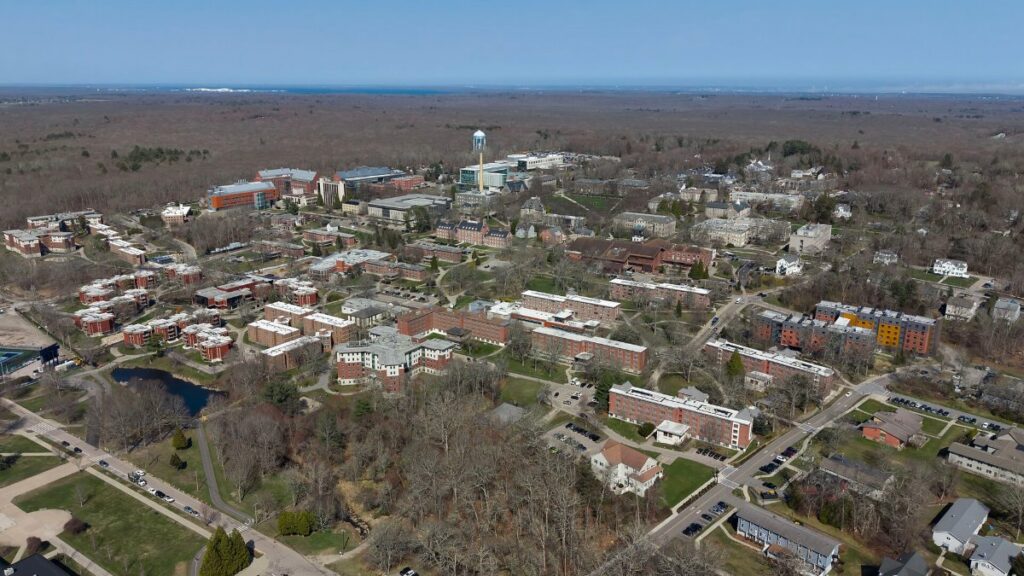
A US federal court has ordered the University of Rhode Island to stop using all Synopsys software, after Synopsys sued over counterfeit license keys that it said university employees used more than 135,000 times. The complaint traced the use to university workstations and to a user profile that appeared to belong to a professor. It sued the university and ten not-yet-identified individuals.
At a glance
- Court: US District Court for the Northern District of California, Judge Beth Labson Freeman
- Case: Synopsys, Inc. v. University of Rhode Island, No. 5:21-cv-00581-BLF
- Filed: 25 January 2021
- Temporary restraining order: 4 February 2021
- Claim: circumvention of a technological measure controlling access to copyrighted software, Digital Millennium Copyright Act, 17 U.S.C. § 1201
- Outcome: confidential settlement in August 2021; the university may use Synopsys software only under a valid Synopsys license
Counterfeit keys on university workstations
Synopsys controls access to its electronic design automation software, including its HSPICE circuit simulator, with license key files. The university held a Synopsys license. According to the complaint, multiple university employees instead used counterfeit license keys to access the software, more than 135,000 times, on at least two workstations connected to the university’s network.
The complaint alleged that the employees acted “in the course and scope of their employment and for purposes benefiting URI”, and that one of the user profiles linked to the workstations appeared to belong to a university professor. Besides the university itself, Synopsys sued ten “Doe” defendants, a placeholder for individuals it had not yet identified.
Ordered to stop within ten days
On 4 February 2021 the court granted a temporary restraining order. It barred the university, and anyone acting with it, from accessing, using, copying or transferring any Synopsys software without authorization, ordered it to preserve all relevant evidence, and required the computers linked to the identified user accounts to be imaged by a neutral forensic consultant.
The court found that Synopsys was likely to succeed on its claim that the university had circumvented Synopsys’ technological measures to gain unauthorized access to its software, and that Synopsys would suffer irreparable harm without an order.
The order “would do no more than require Defendant to comply with federal and state anti-piracy laws.”US District Court for the Northern District of California, 4 February 2021
The university’s defense
The university denied the allegations. It argued that any harm was caused by people acting outside the scope of their employment, said its own security software had first flagged possible counterfeit key use in November 2020, and objected to unrestricted access to computers holding unrelated private information.
Settlement
In August 2021 the parties settled on confidential terms. Under the court’s order the university may use or access Synopsys applications only with a valid license issued by Synopsys. The court kept jurisdiction to enforce the agreement, with attorneys’ fees and costs for the winning side in any enforcement action, and the case was dismissed.
Why this case matters
- Universities are not exempt. A public university was ordered to stop using a vendor’s software across the board within days of being sued.
- Staff accounts lead to the institution and to individuals. The case was built on specific employee accounts, including what appeared to be a professor’s, and the lawsuit also named ten unidentified individuals as defendants alongside the university.
- Each use can count. Under the DMCA, statutory damages run from US$200 to US$2,500 per act of circumvention; at 135,000 alleged uses, WPRI put the maximum exposure at about US$337 million.
- Holding a license is not enough. The university was a licensee, but using counterfeit keys to get beyond it was the basis of the claim.
Source: temporary restraining order (4 February 2021); complaint (25 January 2021); WPRI; Bloomberg Law; BYU Copyright Licensing Office on the university’s answer and the settlement.
Received a notice from ITCA? See how to verify and resolve it.
