A software publisher can often see that its product is being used without a license, and from which IP address, without knowing who is behind it. In Canada, the law gives rights holders a way to close that gap: a court order requiring the internet service provider (ISP) to disclose who the subscriber is. ITCA works with experienced Canadian counsel to bring these applications on behalf of software publishers.
Step 1: notice and notice
Under Canada’s notice-and-notice regime (sections 41.25 and 41.26 of the Copyright Act), a copyright owner can send an ISP a notice of claimed infringement linked to an IP address. The ISP must forward the notice to its subscriber and keep records that would allow the subscriber to be identified. The ISP does not, however, tell the copyright owner who the subscriber is. For that, a court order is needed.
Step 2: a Norwich order
A Norwich order is a pre-trial order requiring a third party, here the ISP, to disclose information the rights holder needs to bring a claim. In BMG Canada Inc. v. John Doe (2005 FCA 193), the Federal Court of Appeal set out the conditions. In summary, the applicant must show that:
- it has a bona fide claim of infringement against the unknown subscriber;
- the ISP is connected to the matter and is the only practical source of the subscriber’s identity;
- the ISP will be reasonably compensated for complying; and
- the public interest in disclosure outweighs the subscriber’s privacy interest.
Evidence matters at this stage. The applicant typically files affidavit evidence linking specific IP addresses and dates to unlicensed use of its copyrighted software, together with proof that it owns the copyright.
The safeguards
Canadian courts grant these orders with conditions to prevent abuse. In Voltage Pictures LLC v. John Doe (2014 FC 161), the Federal Court ordered an ISP to identify subscribers but imposed safeguards that have since become standard:
- disclosure is limited to the name and address tied to the IP addresses in evidence;
- the information is confidential and may be used only for the claim;
- the court may review the first letter sent to each subscriber, which must state that no court has yet found the subscriber liable;
- the rights holder may not publicize the information obtained; and
- the ISP’s reasonable costs are paid by the rights holder.
In Rogers Communications Inc. v. Voltage Pictures, LLC (2018 SCC 38), the Supreme Court of Canada confirmed that ISPs may recover their reasonable costs of complying with a Norwich order, but not the costs of steps they must already take under the notice-and-notice regime.
What happens next
Once the subscriber is identified, the rights holder can contact them directly, within the limits the court has set. Many matters are resolved at this point, with the subscriber purchasing the licenses they need. Where a subscriber does not respond, the rights holder can name them in a statement of claim and proceed with the copyright action.
Why it matters for software publishers
- Anonymity is not a defense. Using unlicensed software from a home or small-office internet connection does not put the user out of reach.
- The process is court-supervised. Publishers gain a lawful, structured route to identify infringers, and subscribers are protected against overreach.
- It works best with strong evidence. Clear records of unlicensed use, tied to IP addresses and dates, are what persuade the court.
ITCA prepares the evidence and works with Canadian counsel to bring ISP disclosure applications, then manages the follow-up with identified users toward a license or settlement. Publishers who want to know whether this route fits their situation can contact ITCA.
Sources: Copyright Act (R.S.C. 1985, c. C-42), ss. 41.25–41.26; BMG Canada Inc. v. John Doe, 2005 FCA 193; Voltage Pictures LLC v. John Doe, 2014 FC 161; Rogers Communications Inc. v. Voltage Pictures, LLC, 2018 SCC 38.
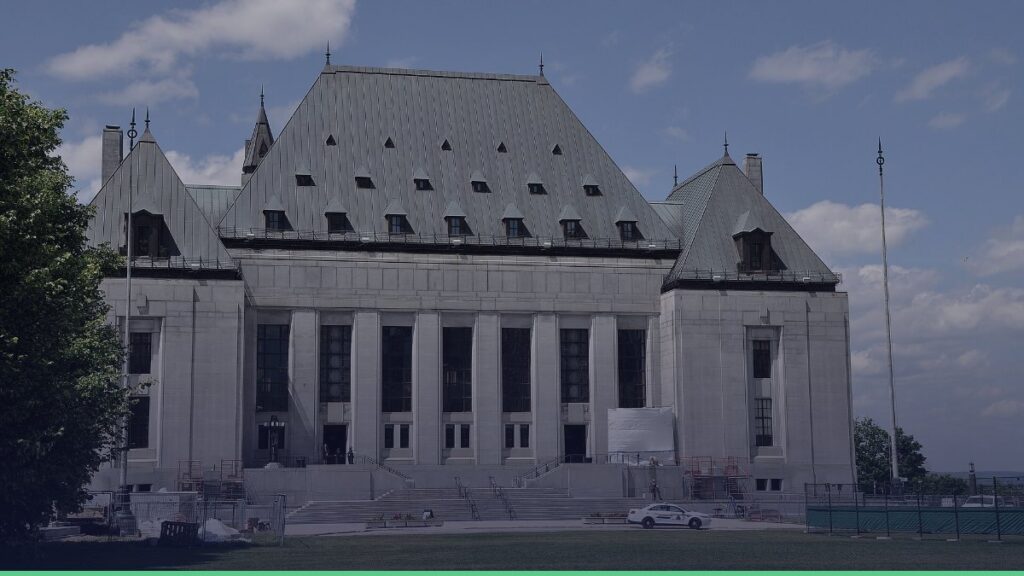
Header photo: shankar s. from Dubai, united arab emirates, CC BY 2.0, via Wikimedia Commons (cropped and toned).
