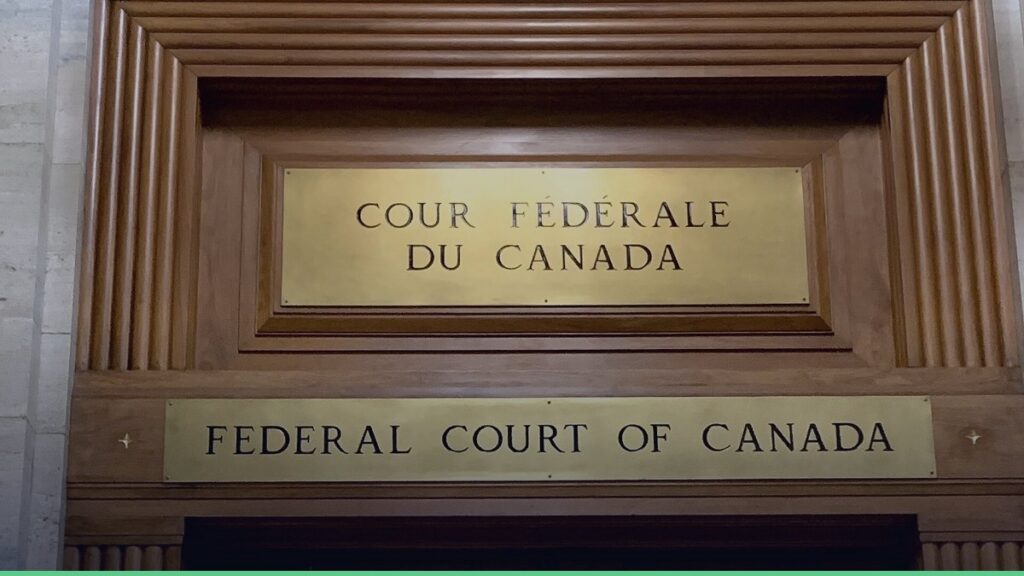
A Canadian company director who refused to pay for a single software license ended up personally liable for pirated software. The Federal Court of Canada ordered him and his company to pay about CAD 268,000, a writ was issued to seize their property, and he paid CAD 80,000 to end the case. The original license he had agreed to buy would have cost about CAD 48,700.
The case, Trimble Solutions Corporation v. Quantum Dynamics Inc., 2021 FC 63, was brought by Trimble and its Canadian reseller BuildingPoint Canada, with ITCA running the compliance case from the start.
A license signed, but never paid
ITCA identified unlicensed use of Tekla Structures, Trimble’s structural design software, on six computers at Quantum Dynamics, an engineering firm in Mississauga, Ontario, over several years. BuildingPoint contacted the company several times with license quotes, and in February 2019 ITCA wrote to the director.
The director apologized, said the software had been used without his knowledge, and promised to delete it. He signed and returned a license agreement for one license. He never paid, the software was not removed, and the company stopped responding.
Default judgment and personal liability
Trimble and BuildingPoint sued the company and the director in the Federal Court of Canada in 2019. Neither defendant filed a defence. ITCA, Trimble and BuildingPoint provided the evidence for the default judgment motion, which was heard in January 2020.
In its judgment of 19 January 2021, the court found that both the company and its director had infringed Trimble’s copyright and held them jointly and severally liable. The director could not hide behind his company.
What the court ordered
- Damages of CAD 212,931, based on the license and maintenance fees for the six computers.
- CAD 50,000 in punitive damages. The court pointed to the director’s failure to delete the software after promising to do so.
- CAD 5,000 in costs, plus pre- and post-judgment interest.
- A declaration of infringement and an order to stop using the software.
Enforcement: a writ against company and director
The defendants did not pay. In March 2021 the court issued a writ of seizure and sale directing the sheriff to seize and sell the property of both the company and the director, including real estate. Once the director learned that his house could be sold to satisfy the judgment, he hired a lawyer and acknowledged the debt.
His first offer was CAD 1,500 a month, which would have taken about 15 years to pay off. Trimble refused. The parties then agreed on a settlement of CAD 80,000, paid in two instalments in 2021, and the case was closed.
Why it matters
- Directors can be personally liable. The court held the director liable together with his company, and the writ reached his personal property.
- Ignoring a lawsuit does not make it go away. No defence means a default judgment, and a default judgment can be enforced against the company’s and the director’s assets.
- Broken promises are expensive. Not deleting the software after promising to do so led directly to punitive damages.
- Unlicensed use is the expensive option. A license of about CAD 48,700 became a CAD 80,000 payment, years of legal costs and a public court judgment.
ITCA has since shared the judgment with other organizations found using unlicensed software in Canada, and it has helped bring those cases to a faster resolution. ITCA’s North America team handled the case together with Trimble, BuildingPoint Canada and the law firm Gowling WLG. The names of individuals and the director’s address have been redacted from the published writ.
Read the writ
Skip to PDF contentHeader photo: Mr Serjeant Buzfuz, CC0, via Wikimedia Commons (cropped and toned).
